Short answer
Yes, Komodo dragons are dangerous. They are wild apex predators with a venomous bite, they hunt large prey including water buffalo, and they have killed people in the modern era. Five recorded deaths since 1974, the most recent in 2017.
No, they are not dangerous in the way a Hollywood movie suggests. They are slow, lazy, and almost completely uninterested in tourists who behave themselves. Every working day, thousands of visitors land on Komodo and Rinca and walk past dragons with nothing more dramatic than a good photo.
Both things are true at the same time. The trick is knowing which version you are dealing with.
What a dragon actually does all day
We grew up watching these animals. Most days, a Komodo dragon is the most boring large reptile on Earth. It picks a flat patch of dirt under a tree, drops its body weight, and naps for six to eight hours. Body temperature management. It hunts in short bursts, mostly at dawn or after a heavy rain, then goes back to napping.
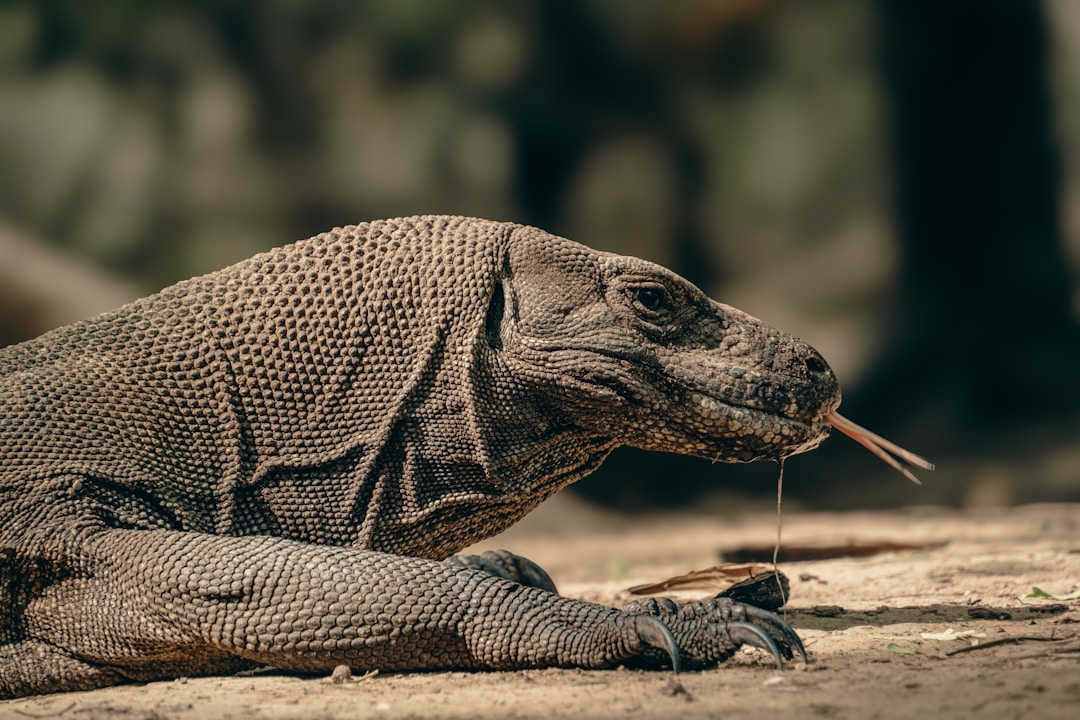
When a dragon is hungry and alert, it changes. The chest lifts off the ground. The tongue flicks more often, picking up scent particles from the air. The head tracks. If you see a dragon doing that, your guide will quietly back you off, no matter how interesting the angle for your camera.
What rangers actually do
Loh Liang on Komodo and Loh Buaya on Rinca are the two ranger stations every legitimate tour visits. Rangers are not show staff. They are trained, armed with a forked wooden staff, and they have spent years reading dragon body language.
- Here is what they will do for you:
- Walk you in a group of six to eight, with a ranger at the front and a ranger at the back.
- Keep you on marked trails. No off-trail wandering, no matter how empty the bush looks.
- Hold a clear five-metre buffer between any tourist and any dragon, increased to ten or more if the animal is alert.
- Step between you and any dragon that moves toward the group, using the forked staff to gently redirect the head.
In the past twenty years, rangers have not lost a single tour group member to a dragon. That track record is the reason the system works.
The actual risk to a visitor
You are at far higher risk on the boat ride than on Komodo Island. Honest assessment of what could go wrong on land:
Ignoring the ranger. Every fatal incident on record involved someone going off-trail, approaching a dragon for a photo, or being a local fisherman gathering shellfish at dusk without a guide. If you stay with your group and listen to the ranger, the risk drops to effectively zero.
Crouching down for a low-angle photo. Dragons see low postures as prey behaviour. A crouched human looks more like a deer than a standing one. Take your photos standing. The image will be fine, and your guide will not have to step between you and a curious dragon.
Wearing red, walking in flip-flops with cuts on your feet, or being on your period. Open wounds matter. Dragons have an exceptional sense of smell, picking up blood from up to four kilometres away. Female visitors are not banned during menstruation, but rangers do ask, and they place you at the back of the group with extra distance.
Bringing food. Do not. The bag will spend the visit in the boat.
The bite, briefly
A Komodo dragon's mouth is the bigger story than the venom. Its bite generat
es moderate pressure, around 600 newtons, much less than a saltwater crocodile, but the teeth are recurved and serrated like steak knives. They tear, not crush.
The venom is real. Sequenced in 2009 by Australian researchers, the saliva contains anticoagulants and shock-inducing compounds. A buffalo bitten by a dragon will bleed and weaken over days, sometimes weeks. The dragon waits, follows, and finishes when the prey collapses.
For a human, the realistic concern is sepsis from the bite itself. If you ever were bitten (you will not be), antibiotics, antivenom protocols, and a fast evac to Bali become the priority.
When dragons are most active
Dragons regulate by sunlight, not season. The hottest hours of the day, roughly 11:00 to 14:00, are when they are most still. Morning and late afternoon are when they move. Tour itineraries time the ranger walks for mid-morning specifically because dragons are easy to spot but not actively hunting.
Mating season runs July to August. Males get more territorial and confrontational with each other. Tourist trails still work the same way, but you may see more dragons in close proximity, sometimes circling slowly around a female.
How to actually enjoy the visit
Stay with the ranger. The walk is short, around 30 to 45 minutes, on flat dusty trails through dry savannah dotted with palm trees. You will see two or three adult dragons, often more. The big ones are usually around 2.5 metres long and 70 to 90 kilograms.
Bring water, a hat, and a camera you can hold at chest height or higher. Wear closed shoes; the ground is hot and there are biting ants. Listen for the ranger's whistle and his quiet "stop". When he says move, move.
If you want to see dragons in their wild state without the heaviest tourist crowds, Rinca Island has a smaller ranger station and fewer day-trippers. Our Komodo day trip visits Komodo Island during the cooler morning window; the liveaboard cruise lets you choose between the two on a Day 2 ranger walk.
Should you bring kids?
We do not recommend taking children under eight on the ranger walk. The rule is simple: kids unpredictably crouch, run, or wander. Rangers can manage adults; they cannot guarantee a six-year-old will not duck behind a bush.
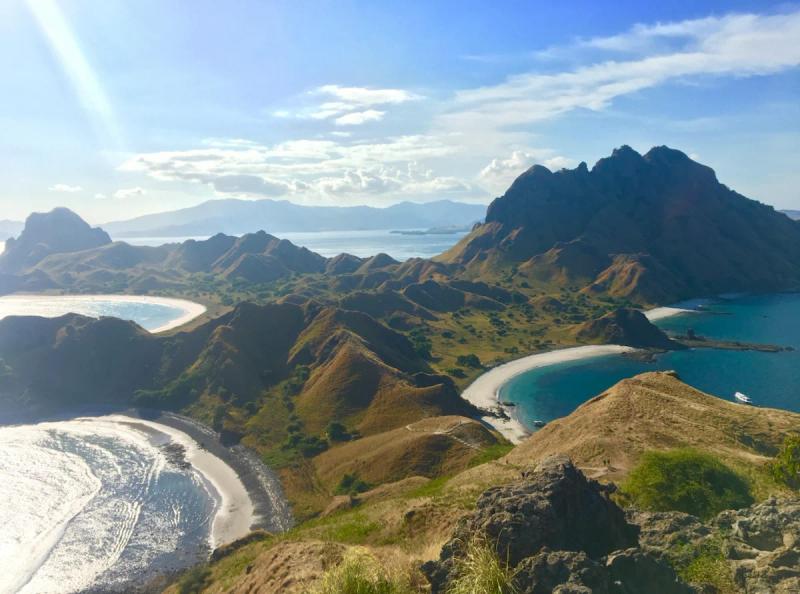
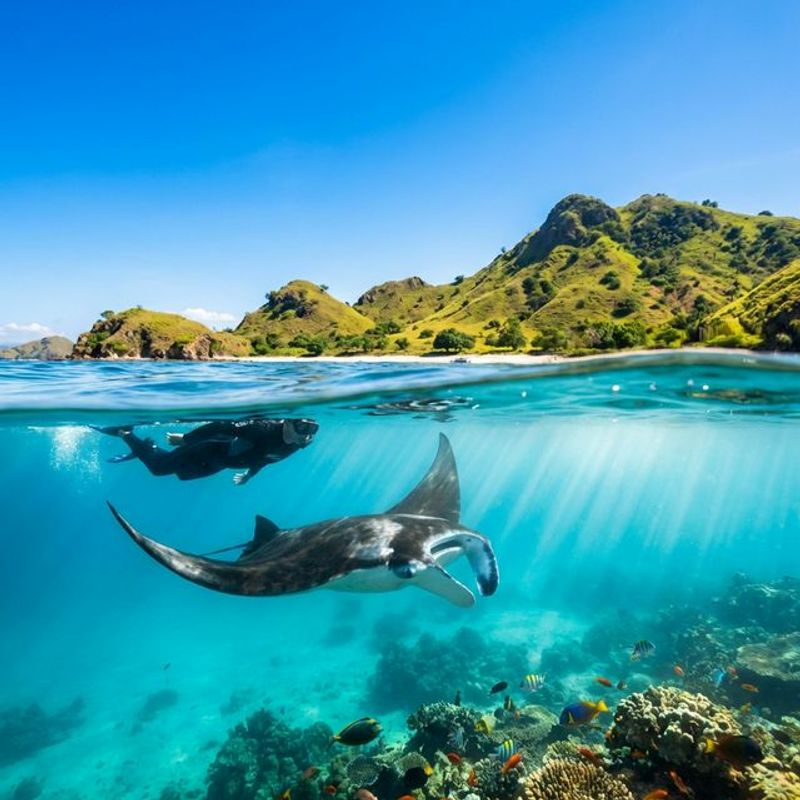
For families with younger children, the boat-based parts of any Komodo tour are excellent (Pink Beach, Padar, Manta Point, Taka Makasar). Just skip the dragon walk and let one parent stay with the kids on board while the other walks. Most operators are happy to split a group this way.
The bottom line
Komodo dragons are dangerous in the abstract sense that any 90-kilogram wild predator is dangerous. In the practical sense of "is my Komodo trip safe", the answer is yes, as long as you visit with a licensed operator, follow your ranger's instructions, and do not try to outsmart a 4-million-year-old design.
We have run Komodo tours for over eight years. Zero dragon incidents on our boats. Zero.
If you want the full park primer (entrance fees, drone permits, when to go), our Komodo National Park guide covers the planning side.
*Got specific worries? WhatsApp our team and we will tell you the truth, even if it is not what your travel agent told you.*